






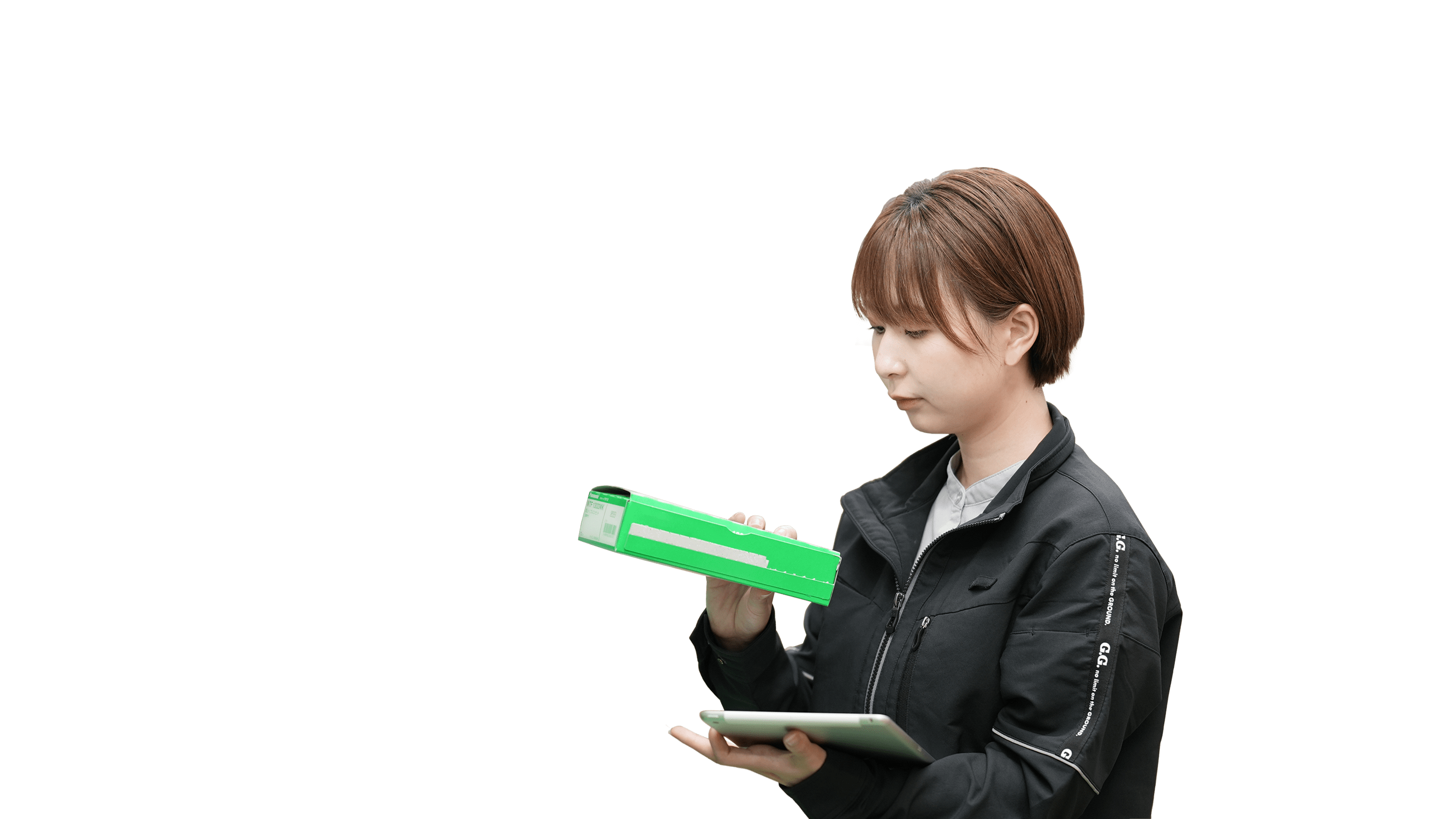



From a Single Light Bulb to Global Workforce Solutions
At Ogawa Electric,
we take pride in our deep expertise across more than 1.5 million products
and the warmth of our people.
It is our mission to face our customers’ challenges head-on—
with knowledge, heart, and a spirit of service.
Nothing is more rewarding than hearing, “I want to buy from you.”
We strive to build relationships that last for the next 100 years.
That’s why we go beyond products and services—
sometimes even connecting people to people—
because we believe those moments of care empower our customers too.
We are a unique trading company that solves problems through the power of people.

Our Business
With partnerships with over 3,000 manufacturers and a product lineup exceeding 1.5 million items, we offer an extensive and diverse selection.


Comprehensive services
to solve every challenge our clients face.


Support

Company Information
| Company Name | Ogawa Electric Co., Ltd. |
|---|---|
| Established | March 21, 1963 |
| Head Office | 2-2-4 Hannan-cho, Abeno-ku, Osaka 545-0021, Japan TEL: +81-6-6621-0031 |
| Capital | ¥90,000,000 |
| Representative Director | Chairman & Representative Director: Norio Ogawa President & Representative Director: Takehiro Ogawa |
| Business Description | A general wholesaler of electrical construction materials, housing equipment, and consumer electronics |
| Fiscal Year-End | March 20 (annually) |
| Main Banks | ・Sumitomo Mitsui Banking Corporation, Bishoen Branch ・MUFG Bank, Ltd., Kitabatake Branch ・Sumitomo Mitsui Trust Bank, Osaka Head Office ・Mizuho Bank, Ltd., Abenobashi Branch ・Ikeda Senshu Bank, Ltd., Showacho Branch |
| Employees | 360 (Group total) |
History
Relocated the Ibaraki Sales Office to Yokoe, Ibaraki City.
50th Anniversary
Established a subsidiary in China; formed a business alliance with a Vietnamese company.
・Moved Mozu Sales Office to Sakai City (Fukai, Naka-ku) and renamed it Senboku Sales Office.
・Integrated the Suita Sales Office into the Ibaraki Sales Office.
・Closed the subsidiary in China.
・Junzo Ogawa became the 6th President of Ogawa Electric, succeeding Norio Ogawa who was appointed Chairman.
・Integrated the Sakurai Sales Office into the Takada Sales Office.
Integrated the Koto Sales Office into the Ritto Sales Office.
・Established a representative office following the closure of the subsidiary in Vietnam.
・Opened the Kyoto Sales Office.
Relocated the Amagasaki Sales Office to Nishinomiya City and reopened it as the Nishinomiya Sales Office.
・Integrated the Asahi Sales Office into the Moriguchi Sales Office.
・Opened the Takatsuki Sales Office.
・Established the 1st and 2nd Offices of the Electrical Construction Sales Department.
・Renamed the Electrical Materials Division of the Tokyo Branch to the 1st Office of the Electrical Construction Sales Department.
・Takehiro Ogawa became the 7th President of Ogawa Electric Co., Ltd., succeeding Junzo Ogawa, who was appointed Vice Chairman.
Relocated the Higashi-Osaka Sales Office to Iwatacho, Higashi-Osaka City.
・The Kaizuka Office has been relocated to Izumisano City and reopened as the Rinku Office.
・The Tarui Office has been consolidated into the Rinku Office.
・The Otsu Office has been consolidated into the Ritto Office.
・The Tool Purchase Kingdom business has been launched in Sakai City.
・The First Electrical Sales Office has been renamed the Tokyo Electrical Sales Department – Tokyo Sales Office.
・The Second Electrical Sales Office has been renamed the Kinki Electrical Sales Department – Osaka Sales Office.
・The Kawasaki Sales Office has been newly established in Kawasaki City, Kanagawa Prefecture.
・The Kyoto Sales Office has been relocated to Takeda Warayacho, Fushimi-ku, Kyoto City.
・Osaka Shohan Co., Ltd.’s Abeno Special Sales Office and Hirano Retail Sales Office have been consolidated into the Naniwa Sales Office.
・Osaka Shohan Co., Ltd. has been renamed Shohan Co., Ltd.
・The Naniwa Sales Office has been renamed the Osaka Branch, and a new Tokyo Branch has been established in Bunkyo-ku, Tokyo.
・The Osaka Sales Office of the Kinki Electrical Sales Department has been relocated within Hannan-cho, Abeno-ku, Osaka City.
・The Digital Sales Office has been newly established.
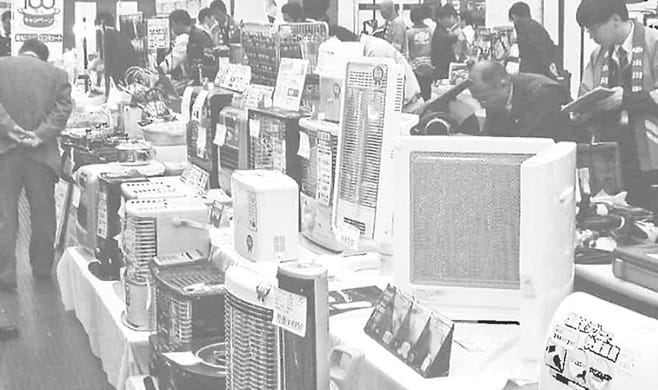
Carrying on the founder’s vision through steadfast and prudent management
In 1985, just as we were aiming for further growth, we were struck by the sudden and unexpected passing of our founder, Isao Ogawa—a critical moment for our company.
Having lost its central pillar, the company's future came into question. However, Kazuo Wada, who had been making remarkable contributions in sales, assumed the position of our second president. He vowed to continue and grow the company that Isao Ogawa had built.
Amid a nationwide atmosphere of excessive economic enthusiasm, President Wada remained steadfast in upholding our founder’s core management philosophy: a customer-first approach. He committed himself to steadily developing the company through prudent and responsible management.
At that time, Ogawa Electric Materials was known for reliably delivering often-scarce components—especially electric wires—to customers at fair prices, earning their trust and loyalty.
In addition to establishing offices in existing areas like Osaka, Nara, and Wakayama, we also expanded into new territories such as Shiga Prefecture. We continued to open new locations at a pace surpassing even our previous goal of “one new office per year.”
At the same time, human resource development became a critical challenge in promoting the expansion of sales offices and the policy of business segmentation.
To address this, in 1987, President Wada began sending prospective managerial candidates to an intensive leadership training school—famously known for its rigorous, boot camp–style curriculum.
Many of those trained went on to become company executives, and their experiences later shaped the design of onboarding programs for new employees. This spirit of training continues to this day.
Strengthening Organizational and Sales Capabilities
Since the early 2000s, a series of corporate scandals—including food manufacturers falsifying expiration dates and automobile companies covering up recalls—have brought regulatory violations to the forefront of public concern.
In response, compliance became one of the top priorities in corporate management. In 2005, Ogawa Denki established a Legal Affairs Section to promote compliance awareness across the company.
In 2005, Ogawa Denki launched DenZai Convenience Store “Doit”, a new business model based on cash-on-delivery transactions.
That same year, six group companies, including Denzai Co., Ltd., were merged into Ogawa Denki to strengthen organizational capabilities.
Furthermore, the company established a Strategic Client Development Division to implement a more proactive, aggressive sales strategy.
Amid a broader movement in which not only large corporations but also small and medium-sized enterprises began pursuing certification for environmental management systems based on the international ISO 14001 standard, Ogawa Denki launched environmental improvement and conservation initiatives.
In the same year, Ogawa Denki Headquarters, Osaka Shohan Co., Ltd., and Ojin Co., Ltd. all obtained ISO 14001 certification.
Around this time, signs of recovery from the deep recession that followed the burst of the economic bubble began to emerge. Although gradual, the recovery was steady. In anticipation of the next era, Norio Ogawa began implementing a new management strategy.
The company transitioned from a headquarters-based structure to a divisional structure, reducing the management burden on the head office while enabling each division to make faster, more autonomous decisions.
As part of its steady preparations for the next era, the company merged with Hannan Telecom Co., Ltd., a mobile phone business, and took additional steps toward future growth.
・Merged with Hannan Telecom Co., Ltd.
・Introduced a holding company structure and split the organization into two entities: Ogawa Denki Co., Ltd. for sales operations and Ogawa Group Co., Ltd. for administrative functions.
・Sakai-Kita Sales Office was integrated into both the Sakai and Mihara Sales Offices.
・Opened the Otsu Sales Office
・Relocated the Toyonaka Sales Office to Hōnanchō, Toyonaka City.
Relocated the Ritto Sales Office to Kokaki, Ritto City.
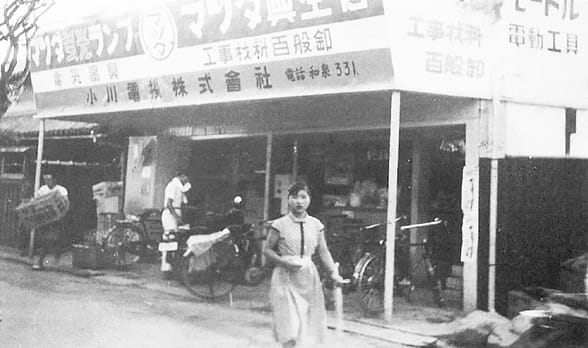
Founding of Ogawa Electric Trading Company
After World War II, even amid the lingering scars of war across Osaka Prefecture, a new era began to emerge—driven by people holding hope for the future.
Believing that electrical technology would become essential for both industrial growth and a more prosperous daily life, Isao Ogawa established Ogawa Electric Shokai in Izumi City, Osaka.
Upon returning from military service, Bunzaburo Ogawa, who had been working as a factory mechanic, partnered with his colleague Kiichiro Kawano to open a privately owned store—marking the beginning of what is now Ogawa Electric.
Isao Ogawa shared meals and living quarters with a team of more than ten employees, including Kawano, working as one unified group with unwavering dedication. This deep sense of unity and commitment became the foundation for what would later be known as Ogawa Electric’s “people-first, family-like management philosophy.”
In the early days, the business focused on repairing radios and selling light bulbs. Over time, as their reputation grew, requests for electrical construction work from local shops began to pour in.
To expand its operations, the business was incorporated as Ogawa Electric Co., Ltd. (now Hanwa Sanyo Co., Ltd.) and established a new office in Abeno Ward, Osaka City.
At that time, Japan had just entered its period of rapid economic growth.
Fueled by the Korean War boom, Japan's economy saw dramatic expansion, ushering in the era of the "Jinmu Economic Boom."
Alongside this growth, the Japan Housing Corporation was established to promote the development of public housing.
In step with these nationwide trends, demand for electrical construction projects surged rapidly, almost doubling year by year.
Around 1959, sales of home appliances known as the "Three Sacred Treasures"—black-and-white televisions, washing machines, and refrigerators—exploded in popularity.
Amid this wave of consumer and infrastructure growth, Ogawa Electric experienced remarkable expansion.
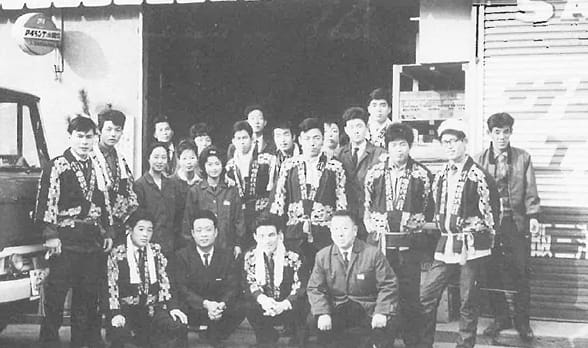
Spin-off of Electrical Materials and Home Appliances Divisions
Establishment of Ogawa Electric Materials Co., Ltd.
To expand the electrical construction materials division of Ogawa Electric, the company established Ogawa Electric Materials Co., Ltd., which was later renamed Ogawa Electric Co., Ltd. in 1991.
Business Growth During the Economic Boom
In response to Japan’s “Income Doubling Plan” announced in 1960, economic activity surged, and people’s lives grew increasingly prosperous throughout the latter half of the 1960s.
Home appliances such as color TVs, air conditioners, and cars—known as the “3 Cs”—gained popularity, while rapid urban development led to a boom in the construction of public and private housing.
Foreseeing continued demand in both the housing and appliance markets, Isao Ogawa founded a new company to support further business expansion.
Formation of a Two-Company System
The home appliances division was renamed Hanwa Sanyo Co., Ltd., creating a two-company structure.
Hanwa Sanyo broadened its product offerings and actively pursued new customer development.
Meanwhile, Ogawa Electric Materials Co., Ltd. rode the wave of Japan’s housing boom, steadily increasing sales through fast, attentive service.
A new sales office was opened in Izumi City, Osaka Prefecture, where the company was originally founded and had many loyal customers.
Following this, under the slogan “One New Office Every Year,” the company continued to expand its regional presence—particularly in southern Osaka—by steadily opening new sales offices.
The Head Office and Sales Promotion Department, which oversees all branches, was relocated to Hannancho 3-chome, Abeno-ku, Osaka—where our current Abeno Branch is located—in order to expand our business operations.
As the company neared ¥4 billion in annual sales with 11 sales offices in operation,
four locations—Izumi, Kishiwada, Sennan, and Wakayama—were spun off to establish Hanwa Ogawa Electric Co., Ltd.
as a subsidiary of Ogawa Electric Materials Co., Ltd.
Following this, in 1982, the company established Nara Ogawa Electric Co., Ltd. by similarly spinning off its sales offices in the Nara region.
The purpose of this corporate spin-off strategy was to enable each company to manage its local sales offices independently, promote regionally rooted business development, and empower young employees by giving them greater responsibilities and leadership roles.
In the wake of the 1985 Plaza Accord, Japan’s exports began to slow, leading to a temporary but serious economic downturn around 1986.
However, the country soon entered what would later be called the “bubble economy”, a period of rapid growth that continued into the early Heisei era.
Meanwhile, at Ogawa Electric Materials, the expansion of sales offices and the company’s corporate spin-off strategy helped cultivate a sense of ownership and healthy competition among younger employees.
In 1984, the company achieved its long-standing goal of reaching ¥10 billion in annual sales.
Contact
Information
Entry
Complete